

Jamaican Payment Technology Trends to Watch
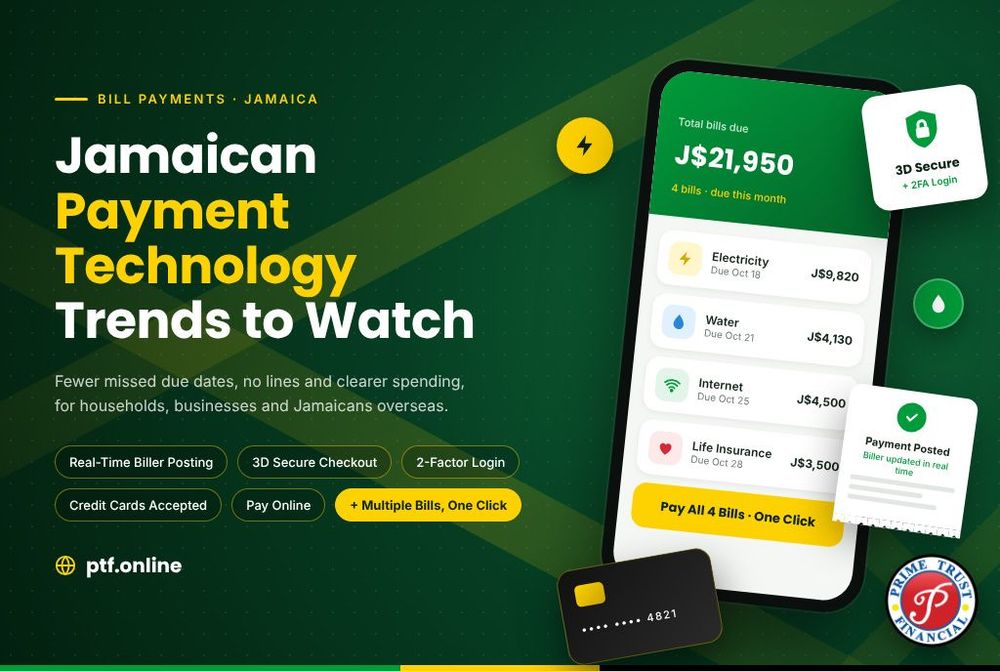
A bill payment is only useful when the customer knows it has gone through. That expectation is driving Jamaican payment technology trends: faster confirmation, more digital access, stronger security, and reliable in-person support when a customer needs it. For households, small businesses, and Jamaicans overseas, the value is practical - fewer missed due dates, less time in line, and a clearer view of where money is going.
Jamaican Payment Technology Trends Are Becoming Hybrid
Jamaica is not moving toward a digital-only payment market. It is building a hybrid one. Customers want the option to pay a bill online from home, but they also want a trusted physical location when they are handling cash, need assistance, or simply prefer a face-to-face transaction.
That is why branch networks remain relevant even as mobile payment use grows. A working adult may pay JPS or Flow online during a lunch break, while a family member may visit a nearby location to complete a cash transaction on the same day. Technology works best when it expands choice instead of forcing every customer into one method.
For service providers, this means digital tools must connect to a dependable retail operation. Online payment receipts, transaction histories, customer support, and in-person verification should support the same customer journey. When those channels do not match, customers lose time and confidence.
The practical direction is clear: give customers a simple online option, but keep convenient human support within reach. That approach matters especially for recurring utilities, remittances, foreign exchange needs, and other transactions where timing can affect a household's budget.
Real-Time Bill Confirmation Is Raising Expectations
Customers increasingly expect their payments to reflect quickly with the company they are paying. A confirmation screen is helpful, but it is not always enough. What matters is whether the utility, telecommunications provider, or other biller recognizes the payment in time to prevent disruption.
Real-time or near-real-time bill posting is becoming a meaningful differentiator. When a payment is sent electronically to the biller and reflected promptly, customers can act with more confidence close to a due date. This is particularly valuable for electricity, mobile, internet, and cable services that households depend on every day.
The trade-off is that speed depends on the connection between the payment provider and the biller. Not every bill category, payment method, or time of day will have the same posting window. Customers should still review the receipt, confirm the account number before submitting payment, and retain transaction details until the payment appears on the biller's account.
Prime Trust Financial supports this expectation by offering bill payments with real-time reflection for JPS, Flow, and Digicel where applicable. For customers, the benefit is straightforward: less uncertainty after payment and a clearer record of the transaction.
Mobile Access Must Be Simple, Not Complicated
A payment experience does not need excessive features to be useful. It needs to make common tasks easy: select the biller, enter the right account information, confirm the amount, pay securely, and receive proof of payment. The fewer unnecessary steps a customer faces, the lower the chance of an abandoned payment or an account-number error.
Mobile-first design matters because many customers use a phone as their primary connection to financial services. Diaspora customers may be paying a Jamaican bill from another country and across different time zones. A parent in Kingston may be checking a balance between work and home. A small business operator may need to settle an account before opening for the day.
Clear screens, readable receipts, and immediate confirmation help each of these customers complete a task without calling for help. At the same time, payment providers need to avoid assuming every user has constant high-speed data or wants to download another app. Secure web access, well-designed mobile pages, and accessible physical locations can serve more people than one channel alone.
Cross-Border Family Support Is Becoming More Direct
Sending money to Jamaica has long been essential for many families. Payment technology is expanding what overseas support can look like. Instead of sending funds and asking a relative to manage every payment afterward, a customer abroad may be able to pay a utility bill, purchase a gift card, or cover another defined expense directly.
This can bring more control to the sender and reduce pressure on the recipient. It also creates a clearer payment trail. For example, a customer in the United States can pay an electricity bill for a family member, receive a confirmation, and know that the support was applied to the intended need.
Direct payment is not always the right answer. Recipients may need cash for groceries, transportation, school expenses, or an urgent personal matter. The strongest service model offers options: bill payment for specific obligations, money transfer services for flexible support, and foreign exchange services for customers who need to manage currency.
As these services become more digital, transparency matters. Customers should be able to understand the amount being paid, applicable fees, exchange rates where relevant, and expected posting time before they authorize a transaction. Clear information is not an extra feature. It is part of what makes a payment service trustworthy.
Businesses Want Faster Collection and Better Records
For small businesses and billers, payment technology is not only about accepting more ways to pay. It is about reducing the work that happens after payment. Manual reconciliation, delayed reports, and unclear references can consume time that should go toward serving customers.
Merchant bill collection tools are gaining attention because they can centralize payments from customers who use different channels. A business may need to accept an online card payment, an in-person payment, or a payment made through an authorized collection partner. If each transaction carries the right account reference and appears in a usable report, the business can identify paid accounts faster.
Good payment data also supports better customer service. When a customer calls about a payment, staff should be able to locate the transaction without searching through paper records or waiting days for an update. For businesses with recurring collections, speed and accuracy can improve cash flow and reduce customer disputes.
There is a cost consideration. Integration, reporting, and settlement schedules vary by provider, so a business should evaluate more than transaction fees. Ask how quickly funds are settled, how exceptions are handled, what reporting is available, and whether customers can pay through the channels they already use.
Security Is Becoming Part of Customer Convenience
Convenience without protection is not convenience for long. Customers are more alert to suspicious messages, impersonation attempts, and requests for account information. Payment providers must make security visible through secure checkout processes, clear receipts, identity checks where needed, and responsive support when something does not look right.
Customers also have a role to play. They should verify account numbers before paying, avoid sharing one-time codes, use official payment channels, and review transaction receipts immediately. For repeat payments, save information only when the service offers a protected and trusted process.
The best security measures do not make customers feel punished for trying to pay a bill. They prevent avoidable mistakes while keeping legitimate transactions moving. That balance is especially important for older customers, first-time digital users, and overseas customers who cannot easily visit a branch to resolve an issue.
What Customers Should Look for Next
The most useful payment technology will continue to remove friction from ordinary financial tasks. Expect more demand for faster posting, clearer payment status, digital receipts, direct overseas bill payment, and stronger links between online service and nearby physical locations.
When choosing a payment provider, focus on the details that affect your day: Does the payment reach the biller promptly? Can you get help if needed? Are fees and rates explained clearly? Can you use the same provider for several routine needs instead of managing multiple accounts and locations?
Before making your next payment, take a moment to choose the channel that fits the transaction, keep your receipt, and confirm the account details. A few careful seconds can protect your money, your time, and your peace of mind.